

When Rent Goes Up: Understanding the Hidden Costs Tenants Already Pay — and Why Being Informed and Voting Matters
Most renters know the feeling: you open the renewal notice, see the new monthly amount, and feel that familiar mix of frustration and helplessness. It’s easy to assume landlords are simply raising prices because they can. But the truth is more complicated—and more connected to local policy decisions than many tenants realize. Renters do pay taxes, just not directly. Every cost that rises for a property owner eventually shows up in the rent. When we talk about affordability, we have to talk about the full ecosystem that shapes it.
What Actually Drives Rent Increases
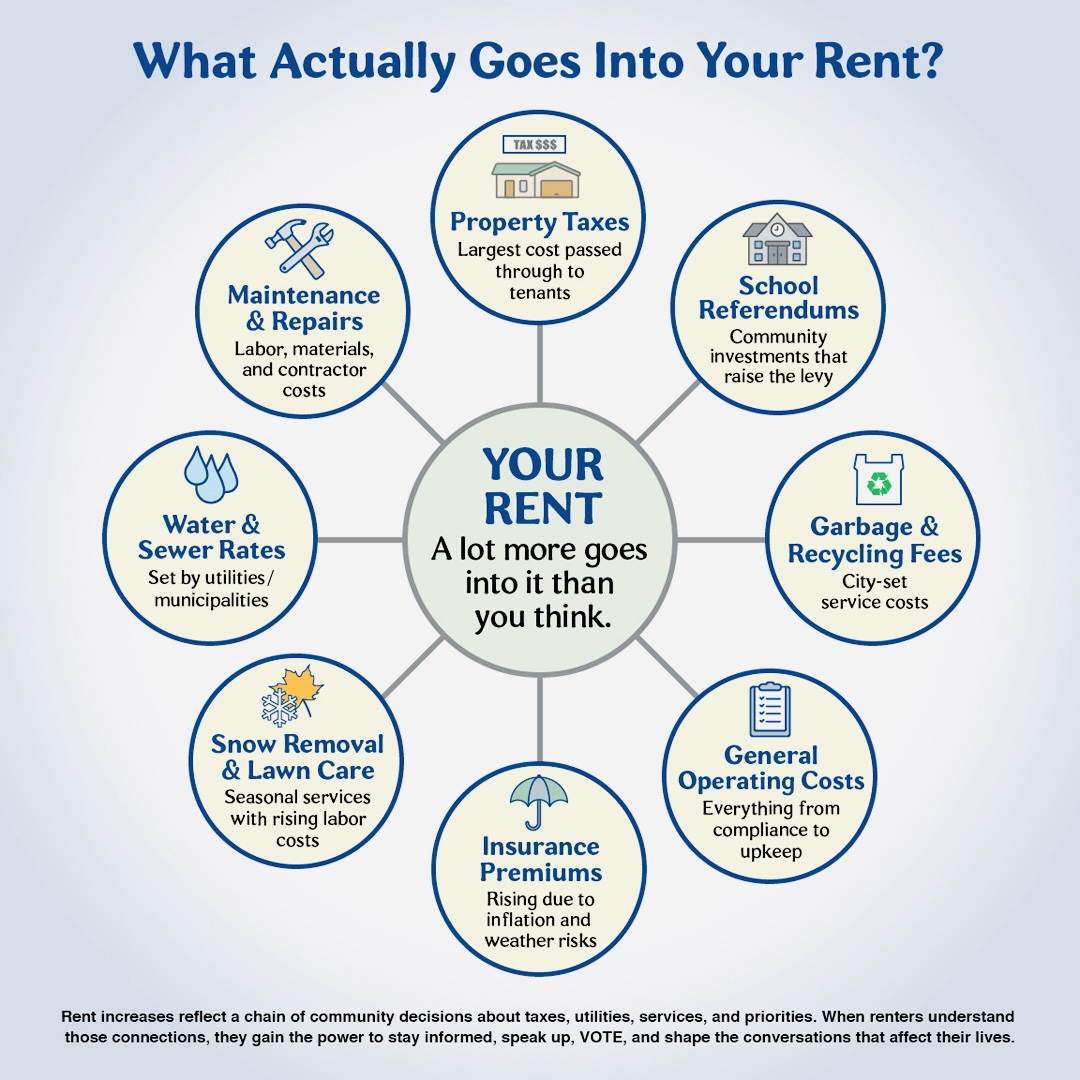
Rent doesn’t rise in a vacuum. Most increases trace back to operating costs that landlords don’t control—costs shaped by city budgets, utility boards, school districts, and state policy. The biggest drivers include:
• Property taxes — The largest expense for most landlords, and the most consistently passed through to tenants.
• Garbage and recycling fees — Set by the city and billed to the property owner.
• Water and sewer rates — Often increased by utilities or municipalities.
• School referendums — Important community investments that also raise the tax levy.
• Insurance premiums — Rising nationwide due to inflation and climate-related risks.
• Snow removal, lawn care, and maintenance — All affected by labor and materials costs.
When these costs rise, landlords—especially small, local ones—don’t have many options. They pass the increases on because the alternative is operating at a loss.
Why Renters Should Care About Local Decisions
Even without a property tax bill, renters are directly affected by decisions about:
• How city budgets are structured
• Whether new fees are added
• How often referendums are proposed
• How utility rates are set
• How efficiently services are delivered
• How state laws limit or expand local spending
These choices shape the cost of living for everyone. When renters aren’t engaged, their perspective is missing—and affordability becomes harder to protect.
How Voting Protects Renters’ Interests
Voting is one of the few tools renters have to influence the forces that shape their monthly expenses. It’s not just about choosing leaders; it’s about shaping the financial environment that determines whether rent stays stable or spikes.
Renters have a stake in:
• Electing leaders who understand how taxes and fees affect rent
• Supporting policies that balance community needs with affordability
• Ensuring transparency in how tax dollars are spent
• Holding decision-makers accountable for the ripple effects of their choices
When renters vote, they help steer decisions that directly influence their cost of living. When they don’t, those decisions are made without them—and often at their expense.
Engagement Builds Power
Local taxpayer associations, neighborhood groups, and civic organizations can help renters understand how policy decisions translate into real-world costs. They also give tenants a platform to advocate for themselves.
Being engaged doesn’t require taking a hard stance on every issue. It means:
• Asking how proposals affect affordability
• Understanding tradeoffs before voting
• Showing up for spring elections, where many budget decisions are shaped
• Making informed choices that reflect your financial reality
Spring elections often have the lowest turnout—but they frequently decide the policies that most affect rent.
The Bottom Line
Rent increases are the end result of a chain of decisions made by people voters elect. When renters understand that connection, they gain power. When they vote with that understanding, they help shape a community where affordability is a shared priority—not an afterthought.